

Iowa
Ev Charging in Iowa -
Solar Power in Iowa -
Iowa’s official stance in 2026 on commercial EV charging station projects reflects a pragmatic, federally aligned expansion approach rather than aggressive state‑led mandates or incentives. The Iowa Department of Transportation (DOT) continues to implement the National Electric Vehicle Infrastructure (NEVI) program, using federal formula funds to build out fast‑charging stations along designated Interstate corridors (I‑29, I‑35, I‑80 and I‑380). Under this framework, the state administers competitive grants where commercial applicants can receive funds to help install stations with multiple high‑power DC fast chargers, often matched with private investment. These efforts aim to meet federal spacing requirements (chargers every ~50 miles, close to interstates) and support both public use and commercial fleet operations, although implementation has faced delays tied to evolving federal guidance.
From a regulatory perspective, Iowa has clarified how commercial charging stations are treated under state utility law. Administrative rules specify that a commercial or public EV charging station generally is not considered a public utility simply for providing charging, meaning businesses can operate charging services without being regulated like traditional utilities; however, if the charger gets power from another source, the board may look at that relationship differently. This framework reduces regulatory uncertainty for businesses considering investment in charging infrastructure, though stations must still comply with tariffs and other applicable statutes.
Despite these federal and regulatory supports, state‑level incentives for commercial EV charging are limited, which has shaped how projects proceed. Iowa does not currently offer its own state tax credits or substantial direct subsidies specifically for charging infrastructure, though federal incentives like the Alternative Fuel Vehicle Refueling Property Credit (which can cover up to 30 % of a charger’s cost for businesses through mid‑2026) remain available. Utilities such as MidAmerican and local programs (e.g., rebates in Ames) provide additional support, but these are utility‑specific rather than broad state programs. At the same time, new state taxes—such as a per‑kilowatt‑hour excise tax on electricity delivered at commercial charging stations—mean businesses and drivers can face additional costs that influence the economics of charging station deployment.
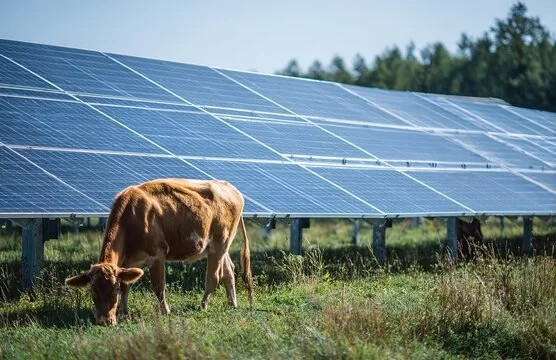
In 2026, Iowa’s stance on commercial solar power projects reflects a mix of growing institutional support, regulatory adjustment, and localized resistance. At the state level, regulatory bodies like the Iowa Utilities Commission have recently approved large-scale solar expansions such as MidAmerican Energy’s settlement to add 800 megawatts of new solar capacity—the largest in state history—citing cost‑effectiveness and customer benefits alongside environmental groups’ support for moving toward more renewable power generation. This kind of approval signals that established utilities and state regulators are increasingly willing to integrate commercial solar into the broader energy mix as part of long‑term resource planning.
Despite these developments, policy incentives and barriers coexist. Federal incentives from the Inflation Reduction Act and related credits have spurred interest in solar deployment, but state‑level direct tax credits for commercial installations are limited, and some older Iowa solar tax credits have expired or are no longer widely available. Iowa does offer sales tax exemptions and property tax exemptions that benefit solar projects broadly, but specific state commercial tax incentives have been constrained in recent years. At the same time, proposed state legislation (e.g., bills to standardize siting approvals across jurisdictions) reflects attempts to streamline development, though such measures also raise concerns over local control and community input on project siting.
At the local and grassroots level, solar projects face both support and opposition. Some counties have expressed resistance or enacted moratoria on commercial solar and other renewable projects over land‑use concerns, particularly when prime farmland or long‑term land agreements are involved. Controversies have surfaced regarding expansive land use exemptions for renewable developers, with critics worrying about impacts on local governance and property rights. These dynamics illustrate that while state regulators and utilities may support commercial solar expansion, community sentiment and land use debates continue to shape how—and where—projects move forward across Iowa.