

New Jersey
EV Charging in New Jersey -
Solar Power in New Jersey -
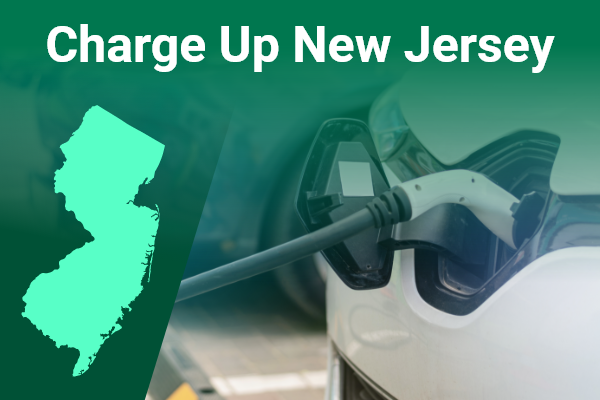
New Jersey in 2026 continues to actively support commercial EV charging station development as part of its broader push toward transportation electrification and clean energy goals. The state has set ambitious infrastructure targets — for example, aiming to have hundreds of publicly available DC fast chargers and thousands of Level 2 chargers by the mid-2020s — and these goals shape how regulators and economic development bodies approach EV charging projects. While some of these statutory goals were aimed at achieving specific milestones (like 400 DC fast chargers at 200 locations by the end of 2025), the overarching policy direction remains supportive of expanding charging infrastructure both for public use and commercial deployment.
At the state program level, multiple incentives and funding pathways are in place to encourage commercial entities to invest in EV charging. Notably, the New Jersey Economic Development Authority (NJEDA) approved the $50 million Take Charge Program to subsidize EV charging infrastructure for private commercial fleets, covering a portion of hardware and installation costs — signaling strong encouragement for business participation in charger deployment. In addition, utility-run initiatives like the Commercial Charger Ready Program in partnership with Orange & Rockland and similar “make-ready” incentives from Atlantic City Electric and JCP&L reduce upfront infrastructure costs for businesses installing Level 2 and DC fast chargers.
Regulatory and planning bodies such as the New Jersey Board of Public Utilities (NJBPU) also further this supportive stance with targeted programs — for instance, the EV Tourism Corridor Program that offers incentives for chargers at tourism-linked commercial sites, including hotels and attractions, which can benefit local businesses and enhance traveler charging access across key corridors. Beyond direct incentives, legislative efforts (e.g., proposed tax credits for commercial charger installation) and state climate and transportation policies reflect ongoing political and administrative support for expanding EV charging, though the specifics of these proposals can evolve through the 2026 legislative session.
New Jersey continues to position itself as a leader in commercial solar power development in 2026 through a combination of state-level incentives, structured solicitation programs, and regulatory reforms. Central to this effort is the Competitive Solar Incentive (CSI) program, established under the Successor Solar Incentive (SuSI) framework, which is designed to attract grid-supply and large non-residential solar projects over 5 MW by offering long-term solar renewable energy certificate incentives and a competitive bidding structure. The Board of Public Utilities (NJBPU) has repeatedly opened CSI solicitations, targeting roughly 300 MW of new solar capacity annually, and continues to refine program targets and interconnection processes to streamline commercial project deployment.
In addition to direct solar incentives, New Jersey is expanding complementary programs and regulatory support that benefit commercial solar developers. For example, the state launched building retrofit grants through RETROFIT NJ, which can cover solar plus energy storage components as part of larger clean energy upgrades on commercial and industrial properties. This program, backed by significant Regional Greenhouse Gas Initiative funding, broadens the financial tools available for commercial solar. Moreover, “dual-use” agrivoltaics and community solar programs continue to be promoted, enabling commercial rooftops, warehouses, landfills, and farms to deploy solar projects that benefit local communities and generate distributed energy.
In addition to direct solar incentives, New Jersey is expanding complementary programs and regulatory support that benefit commercial solar developers. For example, the state launched building retrofit grants through RETROFIT NJ, which can cover solar plus energy storage components as part of larger clean energy upgrades on commercial and industrial properties. This program, backed by significant Regional Greenhouse Gas Initiative funding, broadens the financial tools available for commercial solar. Moreover, “dual-use” agrivoltaics and community solar programs continue to be promoted, enabling commercial rooftops, warehouses, landfills, and farms to deploy solar projects that benefit local communities and generate distributed energy.