EV Charging in Delaware -
Delaware’s 2026 stance on electric vehicle (EV) charging infrastructure is strongly supportive and focused on expanding access statewide through state and federal funding, regulatory incentives, and strategic planning. The Delaware Department of Natural Resources and Environmental Control (DNREC) extended its Clean Transportation Incentive Program through April 30, 2026, offering up to $2,500 rebates on EV purchases and rebates covering up to 90 % of costs for Level 2 charging station installations for businesses and public sites, underscoring continued state financial backing for infrastructure growth as EV adoption rises.
From an infrastructure perspective, Delaware is actively leveraging federal NEVI funds and state investments to build a more robust charging network, prioritizing both urban centers and major travel corridors including I‑95, Routes 1, 13, and 113. The state’s Charging Forward plan reports over 600 commercial and rapid charging stations as of mid‑2024 but projects a need for more than 12,500 additional ports by 2032 to keep pace with anticipated EV growth, with roughly $17.5 million in NEVI funding allocated to DC fast chargers and bids underway for implementation.
Delaware’s policy also integrates equity and practical access considerations, with expanded rebate programs for residential EVSE installation (up to 90 % rebates for low‑income customers) and targeted infrastructure in underserved areas, as well as regulatory requirements for permitting that simplify charger deployment. Public data show Delaware’s EV registrations at 8,400 battery EVs and 3,800 plug‑in hybrids in 2023 with roughly 746 public electric charging ports statewide, illustrating both growing EV uptake and the state’s commitment to closing infrastructure gaps through coordinated incentives and planning.
Solar Power in Delaware -
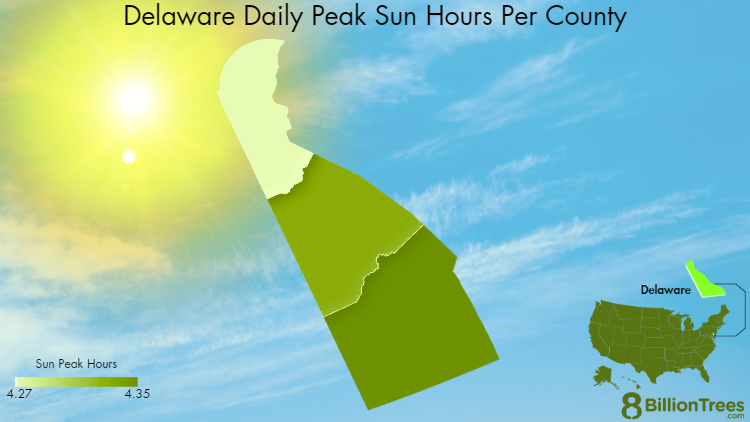
Delaware’s Renewable Portfolio Standard (RPS) legally requires that utilities include an increasing amount of renewable energy in their supply, with a specific solar carve‑out rising to 3.75 % of total retail electricity sales for the 2026 compliance year — up from 3.50 % in 2025 — and overall renewable energy at 25.5 % by 2026. This solar requirement is enforced through the creation and retirement of Solar Renewable Energy Credits (SRECs), which commercial and utility‑scale projects can generate and sell to suppliers to help meet the state’s targets.
Delaware supports community solar (community energy facilities) that allow larger solar projects to serve multiple subscribers, including commercial customers of Delmarva Power, by assigning portions of energy production and bill credits without onsite panel installation. State law (Senate Bill 2 and related PSC rules) formalizes this structure, enabling projects up to several megawatts to operate under a defined subscription model, though caps on subscription percentages and service territory requirements apply.
In addition to market‑driven SRECs, Delaware offers incentive programs like the Green Energy Program rebate and allows net metering and larger system sizes for non‑residential installations (up to 2 MW per meter), which help improve commercial solar economics. Federal incentives, including the Investment Tax Credit (ITC), further enhance project viability. While Delaware’s incentives are more modest than some states, the combination of a binding solar carve‑out, community solar frameworks, and tradable credits provides a predictable policy environment for commercial solar development in 2026.