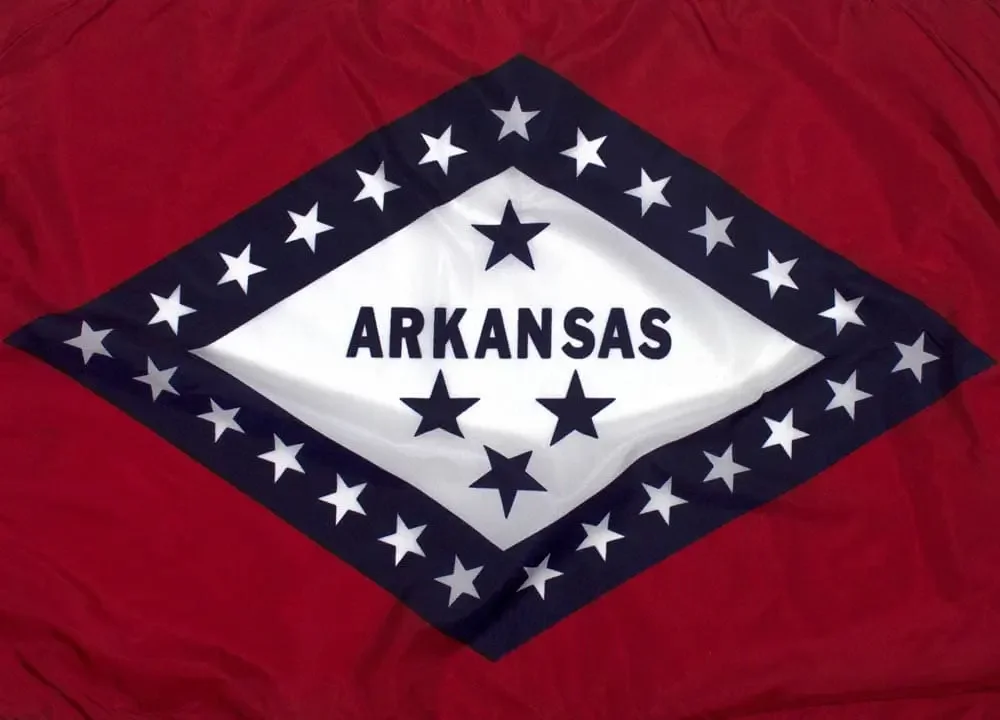
Arkansa
EV Charging in Arkansa -
Solar Power in Arkansa -
Arkansas’s 2026 stance on commercial EV charging station projects remains supportive but rooted in federal funding and measured state incentives, backed by recent deployment and funding data. The state is a participant in the National Electric Vehicle Infrastructure (NEVI) Formula Program, a federal initiative under the Bipartisan Infrastructure Law designed to build out EV charging stations along key corridors. Arkansas was allocated approximately $54.1 million in NEVI funding from 2022 to 2026, intended to strategically deploy charging infrastructure—especially on interstates and alternative fuel corridors—with most awards structured as 80 % federal share and 20 % non-federal share for eligible projects.
On the ground, the availability of charging infrastructure in Arkansas has grown significantly in recent years, reflecting that supportive approach. As of late 2025, Arkansas had around 380 public EV charging stations statewide, including a mix of Level 2 and DC fast chargers, and roughly 940 charging ports in total. Earlier state rebate efforts also helped catalyze deployment: Arkansas’s Level 2 rebate program had reimbursed costs for 137 charging stations with over $629,000 in state rebate dollars by 2022. These figures show infrastructure growth, even though the total number of stations is modest compared with more urban states.
At the same time, Arkansas’s policy environment does not mandate that commercial developers install charging stations as part of new construction or regular operations. Instead, the state leans on incentives and rebate programs, such as utility rebates for businesses installing chargers and ADEQ Level 2 installation rebates that vary by applicant type, to encourage commercial build-outs without imposing regulatory requirements. This reflects a stance that facilitates market-driven expansion of EV charging infrastructure—particularly when backed by federal funding—while allowing private demand and cost-effectiveness to guide commercial project decisions.
The state’s stance on commercial solar in 2026 is positive and growing, driven by utility plans like Entergy's expansion, large corporate demand (e.g., Google for data centers), the availability of federal incentives, and state support, despite some local debates over project specifics, with a focus on grid stability and economic growth through significant solar development. While net metering policies for small systems have seen changes, large commercial projects benefit from strong incentives and demand, making Arkansas a key market for solar expansion.
Act 278 passed by the 94th General Assembly in 2023 has overhauled the net metering policy in Arkansas. To take advantage of the current net metering with the “grandfathering” term, Arkansans have until Sept. 30, 2024, to install solar panels to take advantage of net metering at the current 1:1 rate structure. Grandfathering says the net metering rate when the project is developed is not going to change halfway through the contract duration, which is 20 years in this case (referenced in year 2020). Hence the rate structure of renewable energy projects developed before Sept 2024 will be the 20-year grandfathering moratorium at Sept. 2040.
Under the upcoming compensation policy called net energy billing, or instantaneous netting, banking of site-generated electricity, i.e. kilowatt-hours (kWh), within a billing cycle to offset future consumption will not be allowed any more. A system owner can consume electricity generated by their PV systems in real time and export any generation more than on-site consumption to the utility grid and be compensated (credited) by the dollar values based on the avoided costs, which are much lower than the typical retail prices charged to electric ratepayers.