

South Dakota
EV Charging in South Dakota -
Solar Power in South Dakota -
South Dakota’s policy stance on commercial EV charging station projects in 2026 reflects a cautious but development‑oriented approach, balancing limited direct state incentives with alignment to federal infrastructure programs and a relatively deregulated market environment. The state has embraced the National Electric Vehicle Infrastructure (NEVI) Formula Program, which through the Bipartisan Infrastructure Law provides South Dakota roughly $29 million through FY 2026 to build out an EV fast‑charging network across designated corridors and connect to the national system. This plan (maintained by the South Dakota Department of Transportation) prioritizes deployment of DC fast chargers to improve reliability and accessibility but does not itself mandate commercial station construction; rather, it enables both public and private development under federal guidelines for spacing and performance.
At the state legislative and regulatory level, South Dakota has taken steps to facilitate commercial EV charging without heavy oversight. Statutory changes in recent years (e.g., SDCL 49‑34A‑116 and related revisions) clearly exempt EV charging station owners from being defined as electric utilities, removing them from traditional rate regulation and allowing them to sell electricity at retail under a fee structure of their choosing without Public Utilities Commission (PUC) rate controls. This shift, bolstered by a 2024 amendment exempting EV station operators from overcharging statutes, effectively lowers regulatory barriers for businesses to install and operate charging infrastructure. Additionally, the PUC has, at least historically, adopted a hands‑off stance on directly setting EV charging rates, suggesting a free‑market preference in which utilities and charging operators self‑govern until grid or market issues necessitate oversight.
When it comes to state and utility incentives impacting commercial projects, South Dakota’s offerings are modest compared with some other states, with most support coming via rebate and grant programs instead of tax credits or state subsidies. Volkswagen Environmental Mitigation Trust funds are being deployed through the Department of Agriculture and Natural Resources, with up to ~$1.2 million earmarked for public light‑duty EV charging station rebates reimbursing up to 80 % of costs for eligible installations. In addition, utility programs like Black Hills Energy’s Ready EV rebates provide commercial customers cash incentives per port (e.g., up to about $2 000 per Level 2 port and substantially more for DC fast chargers), which help reduce upfront costs but are contingent on utility participation and program terms.
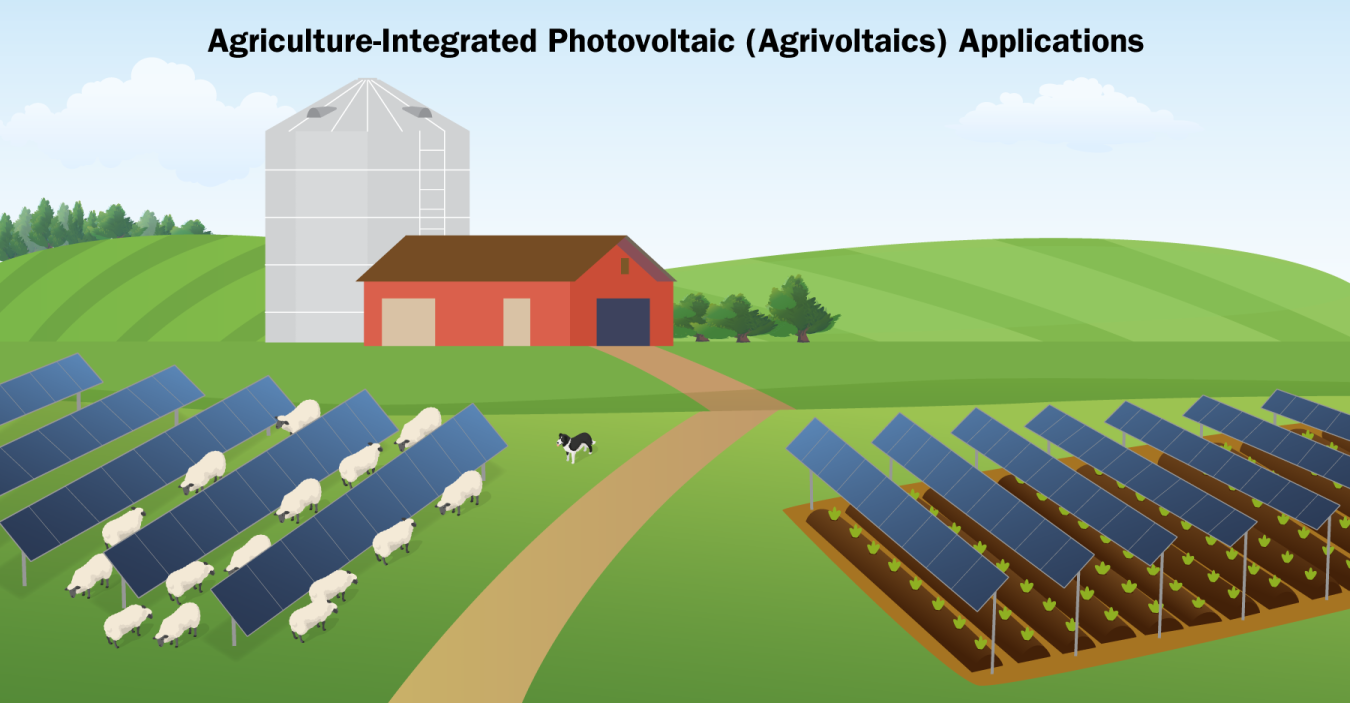
South Dakota’s approach to commercial solar projects reflects a relatively limited but slowly evolving commitment compared with more aggressive renewable states. As of the latest data, the state’s total solar energy generation remains a very small share of its electricity mix—about 47,337 MWh or roughly 0.26 % of total generation in 2023—even after recent utility-scale projects came online. Major commercial and utility-scale installations include the 80 MW Fall River Solar Project and the 128 MW Wild Springs Solar Project, alongside a 1 MW facility near Pierre; these represent recent expansion after decades of minimal capacity.
On the policy and regulatory side, South Dakota does not have a statewide renewable portfolio standard or mandate driving solar adoption, and net metering is not required at the state level, meaning utilities are not compelled to credit small solar producers for excess electricity fed into the grid—this can dampen economic incentives for commercial solar. The South Dakota Public Utilities Commission (PUC) oversees interconnection standards for systems up to 10 MW and has siting authority for solar farms 100 MW and larger, but smaller commercial projects face less uniform oversight and rely more on local utility terms.
Incentives for commercial solar are modest but present, primarily through tax provisions rather than direct subsidies: South Dakota offers a property tax exemption on renewable systems under 5 MW, exempting up to $50,000 or 70 % of assessed value, and commercial solar facilities larger than 5 MW qualify for alternative tax treatment. Additionally, developers can leverage federal tax incentives such as the Investment Tax Credit (ITC), which remains a crucial driver of project economics. The combination of these policies has supported recent commercial solar growth, but the overall solar footprint remains small relative to wind and other sources without stronger state-level mandates.