UTAH
EV Charging in Utah -
Solar Power in Utah -
In 2026, Utah’s stance on commercial electric vehicle (EV) charging station projects reflects a pro‑growth, incentive‑driven approach, balancing state and federal funds with private investment and utility participation. At the state level, the Utah Department of Environmental Quality (DEQ) continues to administer an EV Charger Program that offers rebates to commercial properties, including businesses, non‑profits, and government agencies, with reimbursements up to about $7,000 per charger depending on eligibility. These rebates require compliance with Build America, Buy America standards and formal project approval before installation begins, signaling Utah’s intent to support strategic, quality deployments rather than ad‑hoc installations. Additionally, utility programs—most notably through Rocky Mountain Power—provide significant support by offering rebates of up to around 75% of the cost for Level 2 and DC fast chargers, including up to roughly $30,000 for DCFC stations for non‑residential customers, bolstering private sector involvement in commercial charging infrastructure.
Utah’s embrace of federal funding through the National Electric Vehicle Infrastructure (NEVI) Formula Program underscores its outward‑looking stance on EV infrastructure beyond local incentives. The state has secured approximately $36 million in NEVI funding to strategically deploy DC fast chargers along major corridors, with federal funds able to cover up to 80 % of the cost of approved projects when matched with private investment. This collaboration has already resulted in projects such as the opening of NEVI‑funded fast charging stations near Moab, supported by entities like Rocky Mountain Power and private developers, highlighting a public‑private partnership model that encourages commercial deployment of high‑speed EV infrastructure across both urban and rural areas.
While much of Utah’s approach leans on incentives and federal partnerships, the state also supports targeted funding for underserved regions and specific project types. For example, the Rural EV Infrastructure (REVI) Grant Program allocates dedicated funds to rural electric cooperatives to expand rapid charging infrastructure in remote areas, showing Utah’s policy interest in equitable access statewide. Meanwhile, advocacy and regulatory engagement continue—such as efforts to preserve utility‑based incentive programs during rate reviews—indicating ongoing stakeholder involvement in shaping long‑term commercial charging policy. Together, these strategies reflect Utah’s 2026 position: actively fostering commercial EV charging development through a mix of state rebates, utility incentives, federal funding, and collaborative frameworks to meet rising EV demand while encouraging economic and environmental benefits.
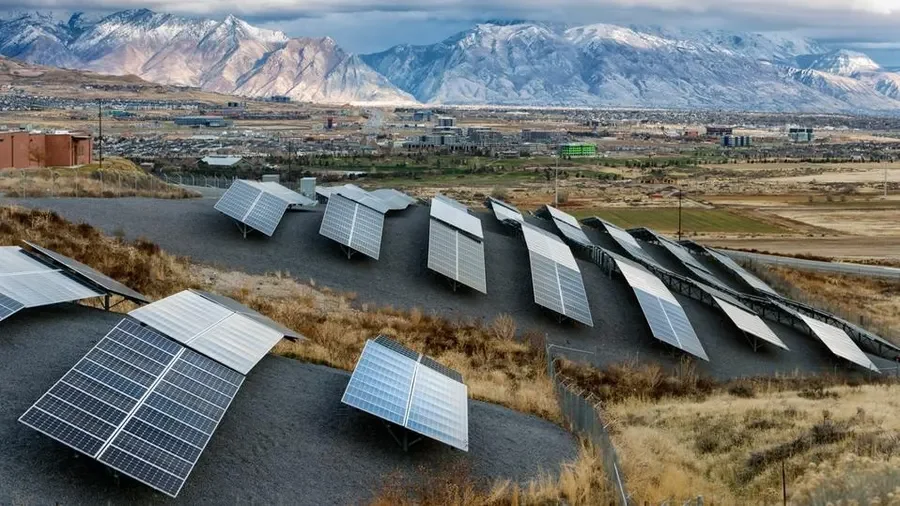
Utah’s commercial solar policy landscape in 2026 reflects a nuanced balance between encouraging renewable energy growth and introducing new fiscal and regulatory guardrails. Historically, the state has supported utility‑scale and commercial solar development through tax incentives like the Production Tax Credit (PTC) and the Renewable Energy Systems Tax Credit (RESTC), which apply to commercial photovoltaic systems depending on size and output (e.g., 0.35¢ per kWh for larger systems and a 10 % credit up to $50,000 for others). These credits reduce project costs and enhance financial viability, and Utah ranks 13th nationally in installed solar capacity (~3,110 MW as of early 2024) with expectations for substantial additional growth by 2029.
However, 2025–2026 legislative changes have shifted the state’s stance toward a more conditional support framework. The Utah Legislature passed measures that impose new requirements and limitations on commercial solar incentives: projects above certain thresholds must pair with energy storage to qualify for state credits, and tax credits for commercial installations will eventually sunset as part of broader reform. Additionally, a new annual renewable energy tax of $1,050 per MW of solar or wind capacity comes into effect on January 1, 2026, for facilities not already under construction or contracted, increasing ongoing costs for new commercial solar generation projects.
Beyond tax incentives and fees, Utah policymakers are also considering land‑use and siting restrictions that could impact commercial solar deployment. Proposed legislation (e.g., H.B. 16 introduced in the 2026 session) seeks to limit eligibility for state incentives on projects sited on prime agricultural land, effectively encouraging developers to avoid productive cropland for large utility facilities. This reflects a broader effort to balance renewable energy expansion with preservation of valuable farmland and local interests. Combined with market signals and federal policy shifts affecting national solar tax credits, Utah’s 2026 stance underscores a transition from broad subsidy‑driven growth toward targeted support conditioned on storage integration, siting, and fiscal contributions.