Washington
EV Charging in Washington -
Solar Power in Washington -
Washington state in 2026 maintains a proactive and funding‑driven stance on commercial electric vehicle (EV) charging infrastructure, emphasizing both public and private project support while navigating shifts in federal policy. At the state level, the Washington Electric Vehicle Charging Program (WAEVCP) continues to be a cornerstone — Round 1 awarded roughly $98.4 million for over 5,000 ports, and Round 2 allocates at least $19.4 million from the Climate Commitment Act and the 2025–27 capital budget to install chargers statewide, including public, multifamily, and innovation sites that are available to both public and private entities with additional application cycles planned for Spring 2026. This program’s focus on expanding access in underserved and rural areas reflects Washington’s broader equity goals tied to transportation electrification.
Washington also layers competitive grant funding and incentives to attract commercial deployment of EV charging. For example, the Electric Vehicle Charging Reliability and Accessibility Accelerator grant is distributing approximately $7.7 million in federal funding to repair or replace existing public chargers and add new ports, though applicants must comply with National Electric Vehicle Infrastructure (NEVI) standards and cost‑share requirements. At the local level, utilities like Seattle City Light offer programs with significant incentives (up to $280,000 per location depending on community status and charger type) covering Level 2 and DC fast chargers as well as make‑ready costs that help reduce upfront site preparation expenses for businesses. Such layered incentives are designed to lower financial barriers for commercial hosts (retailers, workplaces, fleet operators) to build out charging infrastructure that meets growing EV demand.
However, federal policy headwinds in 2025–26 have complicated Washington’s plans. A Trump administration decision to review and temporarily halt elements of the National Electric Vehicle Infrastructure (NEVI) Formula Program disrupted the flow of federal funds for highway EV charging projects and led to suspension of some Washington Department of Transportation programs totaling more than $90 million in planned infrastructure deployment. In January 2026, a federal court ruled it unlawful for the Department of Transportation to permanently withhold NEVI funds, which helps protect Washington’s ability to move forward with federally supported charging projects. Meanwhile, Washington continues to offset federal uncertainty by emphasizing state grants and partnerships with local utilities and agencies to keep commercial EV charging projects progressing in line with its 2035 zero‑emission vehicle sales goal and broader clean transportation strategy coordinated through interagency bodies like the Electric Vehicle Coordinating Council.
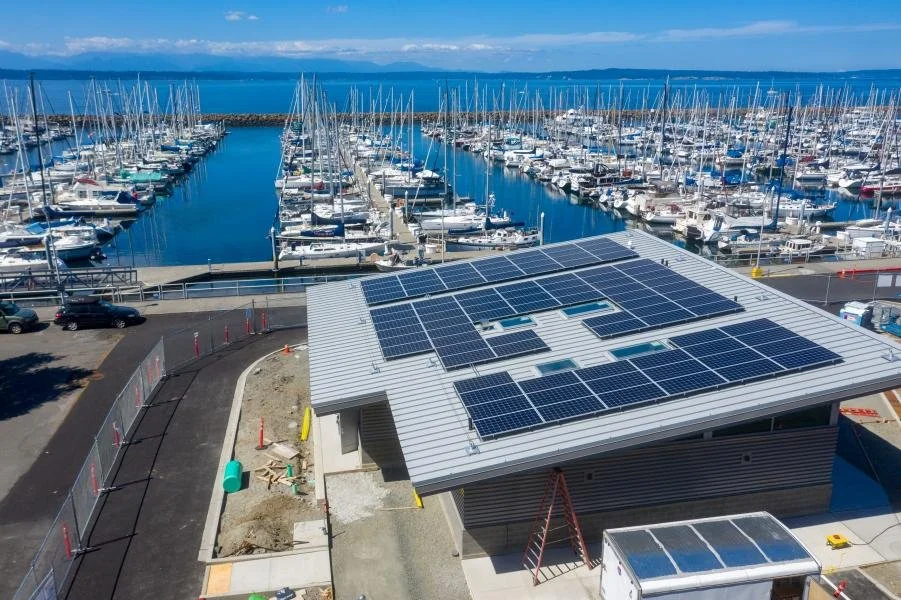
Washington’s stance on commercial solar panel projects in 2026 reflects a mix of continued state-level support, adaptation to federal policy shifts, and evolving market realities driven by incentives and regulatory frameworks. At the core of state policy is the Clean Energy Transformation Act (CETA), which mandates that Washington’s electricity supply be greenhouse‑gas‑free by 2045, effectively creating a long‑term market for renewable energy including commercial solar generation. Under CETA, utilities and developers are pushed to increase solar deployment to meet decarbonization targets, fostering a favorable planning environment for projects of all scales. The state also maintains sales and use tax exemptions on solar equipment—exempting the typical 6.5% state tax (and often local taxes) on systems under certain size thresholds—which helps reduce upfront costs for commercial installations and keeps Washington’s solar investments attractive on a cost basis.
However, 2026 marks a period of adjustment due to significant federal policy changes that substantially impact commercial solar economics. The phase‑out of key tax incentives—especially under federal legislation enacted in 2025 which accelerates the reduction or elimination of solar investment tax credits for projects starting after key deadlines—means that commercial developers face tightening financial windows to secure lucrative credits. For example, federal clean‑energy tax credits for new solar projects must generally begin construction by mid‑2026 to qualify for any extended credits, with projects commencing full build after that at risk of receiving limited or no federal ITC benefits. This federal retreat has prompted state and utility efforts to compensate, such as Washington’s Executive Order 25‑11 establishing a joint clean energy acceleration team to track and speed project deployment, signaling that Washington is proactively trying to blunt federal incentive cuts and maintain project momentum.
In addition to regulatory posture, Washington has layered state and local incentives and capacity programs supporting commercial or shared solar projects, though funding constraints and program maturity vary. The Washington State University (WSU) Renewable Energy System Incentive Program historically offered direct payments for commercial installations, and although it has paused new applicants due to caps, community solar expansion efforts from that program show an ongoing pipeline of certified and pending projects statewide. Participation caps, incentive limits (e.g., up to $25,000 per commercial project with cumulative payments up to 50% of system cost), and utility‑specific annual expenditure caps reveal the practical contours of state support in 2026. At the same time, commercial viability is being shaped by utility decisions on net metering and rate structures: in parts of the state, utilities still offer 1:1 net energy metering, which significantly improves project ROI by crediting surplus generation at full retail value, though such policies could change once participation caps are reached.