

Vermont
EV Charging in Vermont -
Solar Power in Vermont -
As of 2026, Vermont’s stance on commercial electric vehicle (EV) charging station projects reflects a mix of strategic planning goals, public funding involvement, regulatory challenges, and incentive‑driven support. At the policy level, Vermont has codified clear statewide goals to expand EV charging access, particularly for fast‑charging infrastructure. Under state statute, Vermont aims to ensure Level 3 EV charging ports are available within three driving miles of every Interstate exit and within 25 miles of another fast charger along state highways, and ideally co‑located with amenities such as restaurants and restrooms to improve convenience for drivers. These goals align with the state’s EV infrastructure planning frameworks and broader transportation electrification objectives.
Despite these goals, deployment of commercial charging infrastructure has faced real‑world implementation hurdles tied to federal funding dynamics. Vermont originally secured significant funding through the National Electric Vehicle Infrastructure (NEVI) program—with about $21.2 million in obligated funds and 11 priority fast‑charging locations identified along key travel corridors—but progress stalled in 2025 when federal guidance changes paused the program and rescinded prior approvals. The state has since resubmitted plans and works to access revised guidance to continue projects, which includes contracts for multiple fast‑charging sites such as in Berlin, Brattleboro, Rutland, and South Burlington, after resolving portions of the funding uncertainty.
At the commercial and local level, Vermont actively incentivizes businesses to participate in EV charging deployment through a range of state, federal, and utility programs. Commercial property owners, municipalities, and nonprofits can benefit from grant and rebate programs—including up to 30% federal tax credits (up to $100,000 per port) for EV charging equipment and installation, and targeted state or utility rebates covering portions of hardware or make‑ready costs for Level 2 and DC fast chargers. Utilities such as Green Mountain Power and Burlington Electric Department offer additional rebates and special EV rates aimed at reducing operating costs for commercial sites. These financial incentives are designed to stimulate private investment and broaden public access to charging, especially in high‑traffic or underserved areas.
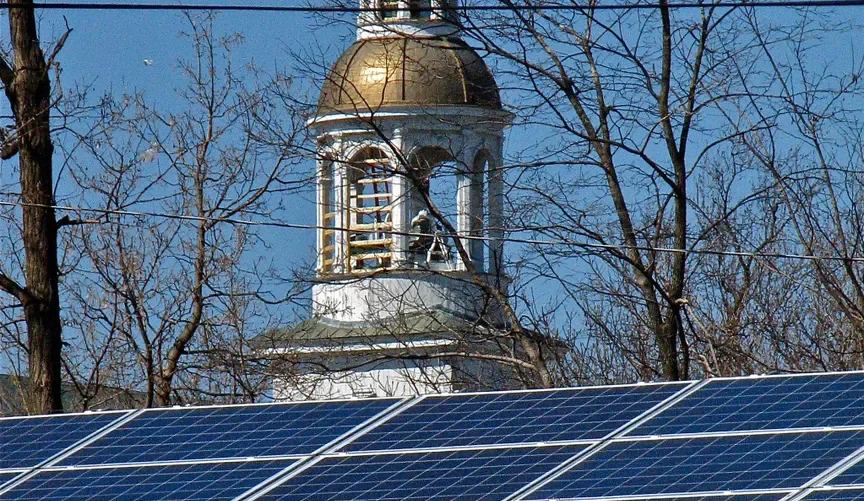
Vermont in 2026 maintains a cautiously supportive but increasingly complex stance on commercial solar power, shaped by its Renewable Energy Standard (RES), net metering rules, and state incentives. The updated RES now aims for 100% renewable electricity with at least 20% generated in‑state, pushing utilities to procure more local solar and distributed resources by 2035—a significant step up from the previous 75% by 2032 goal. However, larger commercial projects still face regulatory constraints: Vermont’s Standard Offer Program supports renewable plants ≤2.2 MW (including solar), with a cumulative cap tied to that category. This legal framework shows the state wants commercial solar built and deployed, but within specific program caps and planning horizons.
At the same time, Vermont’s net metering policy, which affects many commercial and behind‑the‑meter installations up to 500 kW, is being reworked in ways that could reduce economic incentives for these projects. The Public Utility Commission has recently trimmed compensation rates for net metering exports, decreasing the credit rate by roughly three‑quarters of a cent per kWh, a change critics argue will make financing both residential and commercial net‑metered systems harder. Renewable energy advocates have pushed legislature to protect net metering access and expand expedited registration thresholds (e.g., raising the limit for easier registration of solar projects from 15 kW to 25 kW), intending to spur more distributed commercial installations. Yet ongoing debates between regulators and developers highlight tension between cost to ratepayers and incentives for solar deployment.
Vermont also layers incentives and financing support for commercial solar despite some regulatory headwinds. Utilities must offer net metering to all customers including businesses, and state tax incentives, such as investment tax credits and sales tax exemptions, still apply for commercial PV systems up to certain capacities. Programs like the Vermont Economic Development Authority’s Commercial Energy Loan Program have funded hundreds of kilowatts of group net metered solar arrays for businesses and non‑profits, producing emissions savings and local power generation. At the same time, broader policy proposals (e.g., revising the definition of “plant” to ease co‑location of solar on developed land, speeding Section 248 permitting) reflect legislative priority to reduce barriers for larger commercial deployments. Overall, Vermont’s stance in 2026 blends strong renewable targets with evolving compensation structures and regulatory reform aimed at balancing cost, growth, and local economic development in the commercial solar sector.